Ghost Light Access
Theatre accessibility on Broadway and the West End
Disability civil-rights enforcement, operational accessibility auditing, dramaturgical criticism, and institutional analysis across Broadway, the West End, comedy venues, and live-performance spaces.
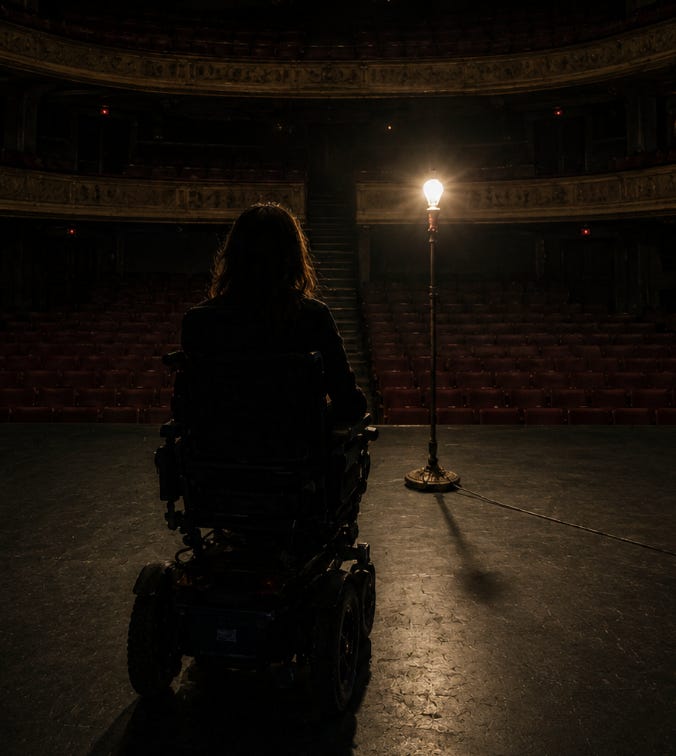
Accessibility in theatre is a civil rights issue, not edge-case customer service or optional hospitality. It governs who can attend, who can work, who can perform, who can move backstage, and who can participate in the informal professional spaces where theatre careers are actually built.
ABOUT THE PROJECT
Ghost Light Access documents disability-access barriers across theatre and live performance, including Broadway, Off-Broadway, the West End, comedy venues, and the public and operational spaces connected to them. Its work covers stage doors, egress routes, backstage areas, rehearsal spaces, audience-access systems, ticketing procedures, assistive technology, seating, crowd management, and emergency planning.
Founded by Kelsey Maurine Brickl, Ghost Light Access combines disability civil-rights enforcement, operational accessibility auditing, theatre criticism, institutional accountability, and public documentation of access failures and successful remediation. The project examines how theatres, producers, venues, and other live-performance organizations meet or fail to meet their legal and operational obligations to Disabled patrons, performers, workers, and members of the public.
Accessibility is a civil-rights and operational requirement. It is not customer service, discretionary hospitality, goodwill, or an optional enhancement to the theatrical experience. Ghost Light Access documents the practical consequences of inaccessible infrastructure, unsafe crowd management, inadequate emergency and egress planning, inaccessible backstage and rehearsal environments, poor disability communication, and procedures built around assumptions about who is expected to enter, work in, perform in, or move through theatrical space.
Particular attention is paid to barriers affecting non-ambulatory wheelchair users and other Disabled people whose access is restricted by physical design, operational policies, staffing practices, transportation interfaces, device restrictions, inaccessible seating or positioning, and failures to anticipate disability-related access requirements.
Ghost Light Access also documents effective institutional corrections. When theatres and live-performance organizations change policies, improve access procedures, expand assistive resources, correct published information, retrain staff, or remedy documented barriers, those changes become part of the public record alongside the failures that required correction.
PRINCIPLES & METHODOLOGY
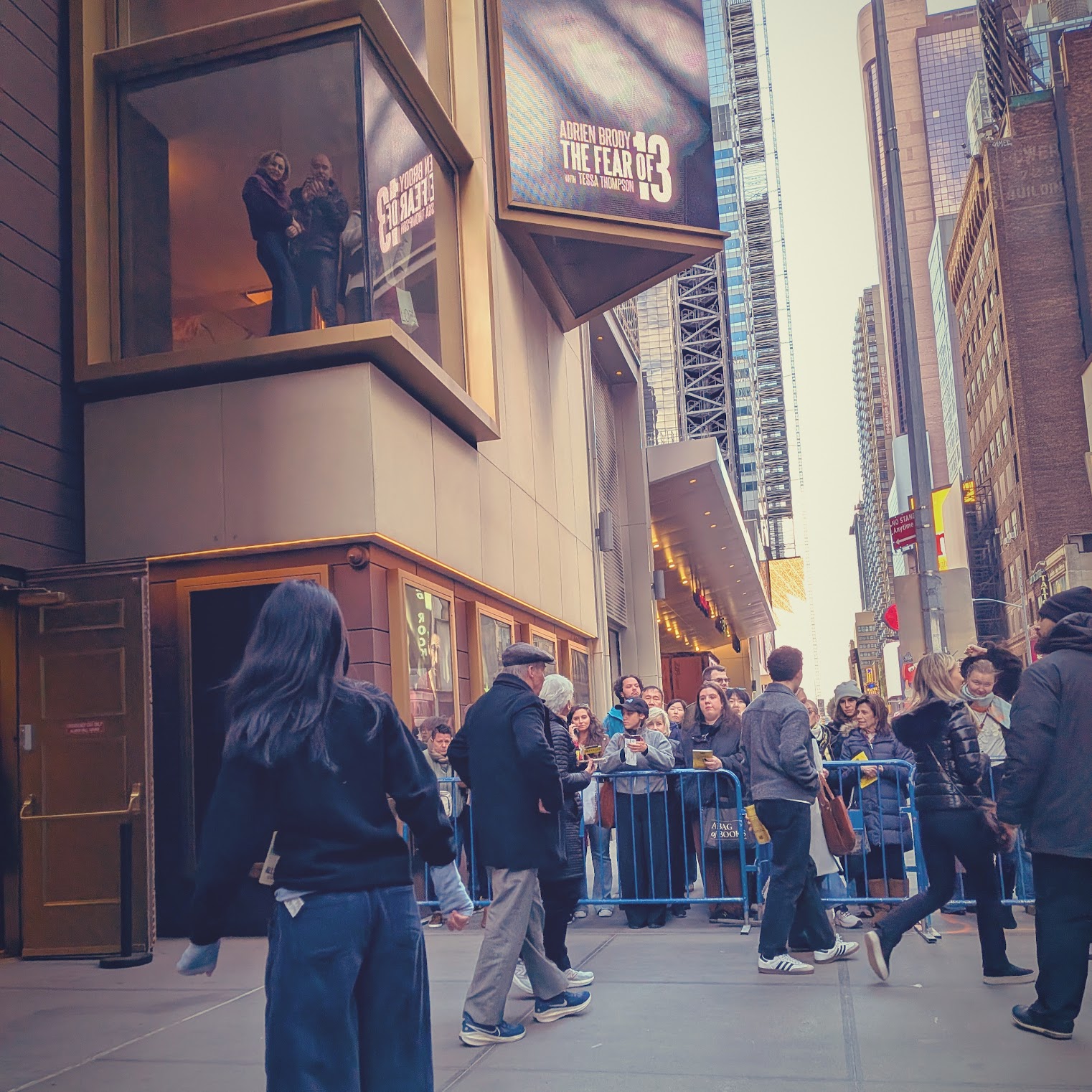
GOOD-FAITH INSTITUTIONAL ENGAGEMENT
This work is documentation-heavy, research-led, and outcome-oriented.
It involves:
- attending productions and venues in good faith
- documenting operational accessibility conditions in real time
- publicly acknowledging successful accommodations and meaningful remediation
- distinguishing genuine compliance from symbolic branding
- identifying foreseeable safety and access failures
- escalating unresolved barriers through formal documentation and civil-rights frameworks where necessary
- maintaining detailed records of institutional responses and corrective actions
- publishing criticism and analysis across Broadway, the West End, and related cultural spaces
Positive institutional behavior is documented alongside failures because durable compliance requires discernment, precision, and accountability rather than indiscriminate outrage.
AREAS OF FOCUS
Stage Door Safety & Crowd Management
Barrier placement, wheelchair-safe pedestrian routing, security protocols, foreseeable harm, crowd compression, emergency egress, and operational management of post-show environments.
Backstage & Professional Access
Dressing rooms, rehearsal spaces, green rooms, technical areas, freight access, employment barriers, backstage routing, and informal professional participation.
Audience Accessibility
Accessible seating, transfer assumptions, restroom access, line-of-sight concerns, sensory access, evacuation procedures, and operational communication failures.
Theatre & Comedy Criticism
Dramaturgical criticism, cultural analysis, institutional mythology, disability representation, labour culture, and structural exclusion within performance industries.
Disability Civil Rights Enforcement
Close statutory reading, operational auditing, evidence preservation, formal notice, documentation of noncompliance, and tracking of institutional remediation.
ABOUT KELSEY
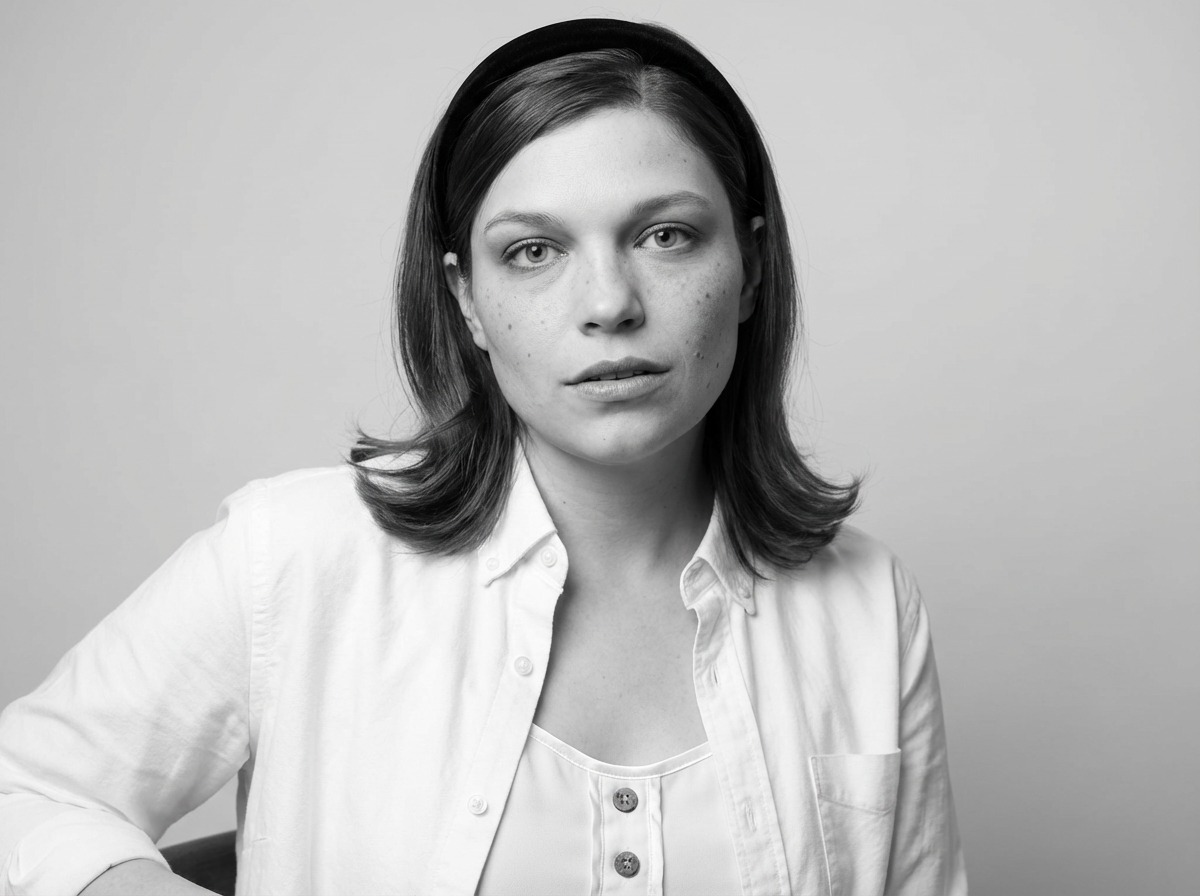
Kelsey Maurine Brickl is a historian, writer, theatre critic, and Disability Civil Rights Enforcement Specialist whose work focuses on identifying, documenting, and compelling correction of disability-law violations across public, cultural, travel, and theatrical institutions.
Her theatre-access work combines operational auditing, dramaturgical criticism, institutional analysis, and disability civil-rights enforcement across Broadway, the West End, comedy venues, and related performance spaces.
Her work is grounded in close statutory reading and in the practical enforcement of disability civil-rights law across the United States, the United Kingdom, and the European Union. She develops precise, evidence-based records of noncompliance that support formal notice, institutional response, and lawful remediation.
Her disability-rights work has contributed to concrete outcomes including physical remediation, policy revision, institutional retraining, operational changes, and formal acknowledgments of noncompliance.
She approaches accessibility not as a matter of discretion, courtesy, or customer-service goodwill, but as a binding civil-rights obligation with material consequences.
REPORT AN ACCESS ISSUE
REPORT A THEATRE OR PERFORMANCE ACCESSIBILITY ISSUE
Reports may include:
- inaccessible seating or ticketing systems
- unsafe stage-door crowd conditions
- inaccessible backstage or professional spaces
- wheelchair egress barriers
- inaccessible rehearsal or comedy venues
- inaccurate accessibility information
- emergency-planning concerns
- discriminatory treatment connected to disability access
- inaccessible dressing rooms or green rooms
- barriers affecting employment or professional participation
Please include:
- venue name
- city
- date
- photographs or screenshots if available
- concise description of the issue
- relevant correspondence if applicable
Current geographic focus:
New York City and London.